
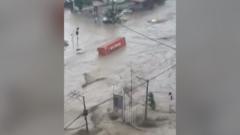
Residents were forced onto rooftops as floodwaters rose rapidly.
What Happened
Severe flooding has struck the region, claiming at least three lives and displacing numerous residents. The floods, caused by relentless heavy rains over the past 48 hours, have inundated homes, submerged streets, and cut off access to essential services. Many families were forced to seek refuge on rooftops, waiting for rescue teams to arrive.
Local authorities reported that emergency response units are working round the clock to evacuate those trapped and to provide food, water, and medical support. Power outages have compounded the crisis, leaving many communities without electricity and communication channels disrupted.
Flooded streets have made travel nearly impossible, stranding residents and vehicles alike.
The affected areas include densely populated neighborhoods, low-lying suburbs, and regions adjacent to rivers and drainage channels, which quickly overflowed under the persistent rain. Officials warn that the situation is far from over, as more rainfall is expected in the coming days.
Why It Happened
Experts attribute the floods to a combination of extreme weather events and vulnerabilities in local infrastructure. Meteorologists report that a series of heavy rainstorms, intensified by seasonal climate patterns, dumped unprecedented volumes of water in a short period.
Urban planning and drainage systems have also contributed to the crisis. Many areas lack adequate stormwater management, causing rivers and canals to overflow rapidly. Climate scientists warn that such extreme rainfall events are becoming increasingly common due to climate change, which increases the frequency and intensity of storms.
Dr. Maria Santos, a climatologist at the Regional Meteorological Institute, explains:
"What we are witnessing is consistent with global trends. Intense rainfall events are becoming more frequent, and cities with insufficient drainage infrastructure are particularly vulnerable."
Immediate Impact and What to Expect
Floodwaters have caused extensive damage to homes, businesses, and public infrastructure. Roads and bridges are submerged, complicating rescue operations and delaying the delivery of emergency supplies. Health services are under strain, as waterborne diseases become a growing concern in the aftermath of flooding.
Rescue teams are working tirelessly to reach stranded residents.
Residents are advised to stay indoors where safe, avoid travel through flooded areas, and follow the guidance of local authorities. Authorities are preparing temporary shelters for those displaced and are coordinating with humanitarian organizations to provide essential resources.
Emergency management experts predict that further disruptions are likely over the next few days, as floodwaters continue to rise in certain low-lying regions. Schools, markets, and public offices may remain closed until the situation stabilizes.
Experts’ Opinion
Urban planning and climate experts emphasize that while immediate relief is crucial, long-term measures are needed to prevent future tragedies. Professor João Almeida, an urban resilience specialist, notes:
"Flooding of this magnitude is a reminder that our cities must adapt to a changing climate. Investment in drainage systems, flood barriers, and early warning systems is essential to reduce the impact of future storms."
Healthcare professionals also warn of secondary crises, including waterborne illnesses and sanitation challenges. Temporary medical facilities and mobile clinics are being deployed to affected regions to mitigate health risks.
Humanitarian agencies stress the importance of coordinated community response. Volunteers are assisting in delivering food, water, and medical aid, while authorities attempt to maintain communication with isolated neighborhoods.
Next Steps and What to Expect
Authorities have issued warnings of additional heavy rainfall in the coming days, and residents are urged to remain vigilant. Emergency services are scaling up efforts, including:
-
Evacuation of stranded residents from rooftops and flooded homes.
-
Provision of temporary shelters, including food, water, and medical care.
-
Restoration of essential services, such as electricity and clean water supplies.
-
Assessment of damaged infrastructure to prioritize repair work.
Communities are being advised to prepare for prolonged disruption, including shortages of basic goods and services. Residents are also encouraged to document damage for insurance and relief purposes.
Temporary shelters are being set up to assist displaced families.
In the longer term, experts recommend investments in flood-resilient infrastructure, improved urban planning, and climate adaptation strategies. Early warning systems and community education programs are critical to reducing vulnerability in future extreme weather events.
"The immediate priority is saving lives and providing basic needs," says Dr. Maria Santos, "but we must also learn from these events to prepare our cities for a future where extreme rainfall is no longer rare."
Authorities continue to monitor water levels and weather forecasts, urging residents to follow official guidance and stay informed. Relief operations will continue around the clock to ensure that those affected by the floods receive timely assistance.