
The U.S. Senate has rejected a resolution that would have required congressional approval for any military action against Venezuela, allowing the Trump administration greater latitude in its operations. This vote highlights ongoing tensions between executive and legislative branches over war powers, a debate that has persisted since the Vietnam War. According to Just Security, the resolution failed 49-51, with limited Republican support. This outcome empowers the administration's maritime campaign while raising questions about constitutional checks and balances. The resolution, introduced by Senator Tim Kaine, aimed to enforce the War Powers Act, requiring termination of hostilities unless authorized by Congress.
Its defeat comes amid concerns over potential escalation in Venezuela, where the U.S. has targeted drug trafficking. Background on the War Powers Resolution: enacted in 1973 to limit presidential war-making, it has been largely ignored by executives. Trump's approach echoes this, using anti-drug authorities to bypass. The vote's partisanship reflects polarized politics, with Democrats seeking oversight and Republicans backing Trump's agenda. Implications for democracy: critics fear erosion of congressional role, leading to unchecked adventures. Supporters argue efficiency in threats.
The resolution had 15 co-sponsors, showing bipartisan worry, but party lines held. Historical parallels include Libya 2011, where Obama acted without approval. This could embolden future presidents. The campaign's success or failure will influence opinions. Public opinion is divided, with polls showing support for anti-drug actions but wariness of wars. The vote's timing, post-briefing, suggests information swayed some. Moving forward, this may encourage more resolutions if land strikes loom.
What Happened
On November 6, 2025, the Senate voted 49-51 to reject a joint resolution requiring congressional approval for military action against Venezuela. According to Just Security, the measure, introduced by Senator Tim Kaine with 15 co-sponsors, would have directed the president to terminate U.S. Armed Forces hostilities unless authorized by declaration of war or specific military force authorization. It received support from Republicans Lisa Murkowski and Rand Paul, but failed along party lines.
This followed a classified briefing on the maritime campaign. The resolution aimed to invoke the War Powers Act, limiting executive actions. Background: the campaign, started in September, targets drug vessels, but fears of expansion prompted the bill. Kaine, a War Powers advocate, has pushed similar measures before. The vote lasted 15 minutes, with no floor debate. Democrats argued for oversight, Republicans for flexibility. This is the 15th such attempt since 1973, most failing. Implications include continued operations without checks.
The resolution's text cited constitutional authority, emphasizing Congress's role. Post-vote, Kaine vowed to continue fighting for oversight. This event is part of broader debates on executive power in foreign affairs.
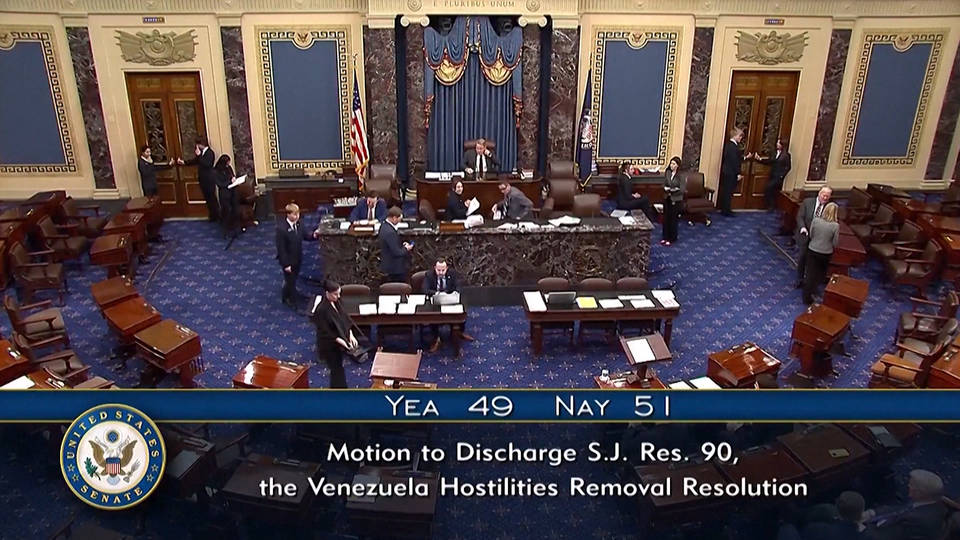
To detail, the roll call showed expected divisions, with moderates crossing lines. The briefing's influence is evident, as officials assured no land plans. This defeat is a win for Trump, reinforcing his policy.
Why
The rejection stems from partisan loyalty and belief in executive flexibility for security threats. According to Just Security, it followed the briefing assuring limited scope, swaying Republicans. Why? Republicans see the campaign as vital for drug fight, avoiding "handcuffing" the president.
Democrats fear unchecked power, citing past wars. Historical War Powers non-compliance encourages this. Political context: with Trump's popularity, GOP hesitates to oppose. Venezuela's crisis, with Maduro's regime aiding cartels, justifies urgency. The why includes legal strategies, with OLC opinions enabling actions. Broader, it reflects post-9/11 expansion of presidential authority.
Critics argue it's constitutional erosion, supporters necessity in fast-paced world. The vote's timing, amid shutdown, shows foreign policy unity in GOP.

Expanding, the drug epidemic's toll drives support. Geopolitics, with Venezuela's Russia ties, adds layers. The resolution's failure maintains status quo, where presidents report but rarely seek approval.
Expert Opinion
Experts view this as continued executive dominance. Constitutional scholar Louis Fisher says, "Congress has abdicated its role, allowing presidents to wage war without accountability." War Powers expert Tess Bridgeman from Just Security notes the resolution's importance for precedent. GOP strategist Karl Rove praises the vote, "It allows decisive action against threats." ACLU's Hina Shamsi warns of abuses without checks. Overall, experts agree on need for reform, but political will lacks.
What to Expect
With the rejection, the maritime campaign continues unimpeded. Expect potential land expansion if legal basis found. Democrats may introduce similar bills. International reactions from Venezuela could intensify. Long-term, this may lead to Supreme Court challenges on War Powers. The campaign's outcomes will shape future policies.